How can multiple scrum teams efficiently deliver valuable, integrated features — sprint after sprint — without creating bottlenecks or silos?
Scaling Scrum across multiple teams doesn’t have to mean added complexity. Vertical slicing offers a powerful, streamlined approach to ensure that each team delivers complete, customer-ready features — every sprint.
Companies that fail to effectively integrate work across teams often see delays and costly rework at release time. Vertical slicing helps prevent these pitfalls by emphasizing continuous, cross-team integration.
One of the simplest scaling approaches is known as vertical slicing, which provides a straightforward solution for dividing the work across teams so they can incrementally deliver and integrate functionality at every sprint. Vertical slicing is a solution if your scaling challenge is breaking down the work across teams.
How might vertical slicing change the way your teams approach sprint planning and delivery?
Highly aligned and autonomous scrum teams do what needs to be done to meet customer needs. Developers working on the same product are each cross-functional enough to work on any item from the product backlog. Each team pulls items from the same product backlog and implements those requirements during sprints aligned on the same cadence. If one team lacks a skill required for any requirement, they work with teams who do to expand their capability, reducing constraining dependencies.
In practice, cross-team collaboration through vertical slicing often leads to a broader skill set within each scrum team, reducing reliance on specialized bottlenecks and increasing the speed of feature delivery.
What dependencies could be minimized in your organization using vertical slicing?
During each sprint, each team integrates its work with the work of other teams, ideally through automation, making integrations less costly and troublesome. At the end of each sprint, all product backlog items selected during the sprint are elaborated, designed, developed, tested, integrated, documented, and approved.
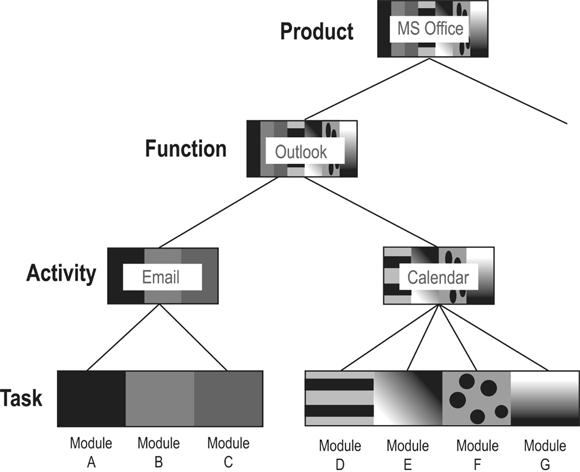
Vertical slicing breaks work into thin, end-to-end increments that deliver real user value. Research in agile software delivery shows that teams who organize work into vertical slices (rather than technical layers) achieve faster feedback loops, higher quality, and fewer integration issues. This approach encourages teams to focus on delivering fully functional features rather than isolated components, aligning better with customer needs and accelerating overall delivery.
With a common baseline definition of done for all scrum teams, vertical slicing enables each team to be self-organizing in its development approach while being aligned with the overall release goal. The product vision and roadmap become the glue tying everyone together.

Technical practices that automate the integration of work between teams help flatten this model, so separate integration scrum team layers are needed less and less. Again, with scrum done correctly, additional scaling overhead isn’t necessary.
Consider your current workflow — where could automated integration reduce friction between teams?
Dividing product work into thin, end-to-end features that can be delivered and integrated by different scrum teams every sprint, resulting in releasable increments.
A shared, baseline checklist of criteria that all product backlog items must meet to be considered complete and potentially shippable at the end of a sprint.
Review a sample product backlog and practice identifying vertical slices.
- Choose three backlog items from your latest project or a sample list.
- For each, decide if it represents an end-to-end, deliverable feature (vertical slice) or a technical layer (horizontal slice).
- Discuss with a peer or note down how you could reframe any horizontal slices into vertical ones.
In a fintech company, vertical slicing allowed three scrum teams to each deliver user-ready features like instant transfers, mobile authentication, and notifications within the same sprint. This not only sped up releases but also improved cross-team knowledge sharing.
With a common baseline definition of done for all scrum teams, vertical slicing enables each team to be self-organizing in its development approach while being aligned with the overall release goal.
Scaling scrum means adding extra integration teams and overhead to manage multiple teams’ work.
With vertical slicing and automated integration, scrum teams can deliver integrated features without extra layers or scaling overhead.
- Explained how vertical slicing enables efficient cross-team delivery
- Explored the benefits of a common definition of done
What is vertical slicing in scrum?
Tap to revealDividing product work into thin, end-to-end features that can be completed and integrated by scrum teams each sprint.
Why is a common definition of done important in vertical slicing?
Tap to revealIt ensures that all scrum teams’ work can be integrated into a working, releasable increment at the end of each sprint.
What is the role of automation in vertical slicing?
Tap to revealAutomation helps integrate work between teams, reducing the need for extra integration layers and minimizing costly, troublesome manual processes.
Reflect on a recent product you worked on: If you had applied vertical slicing, how might your team’s workflow, integration points, or delivery outcomes have changed?
A product has one product owner, one product backlog, and a common to ensure each scrum team’s work can be integrated into a working, releasable increment every sprint.
Describe a scenario where vertical slicing could help resolve integration challenges between multiple scrum teams.
Vertical slicing empowers scrum teams to deliver fully integrated, customer-ready features every sprint, reducing dependencies and scaling complexity.
A shared definition of done and a single product backlog ensure that all teams’ work aligns toward a common, releasable product increment.
How confident are you that you can explain the benefits of vertical slicing to a colleague?
The Shift
- Vertical slicing enables multiple scrum teams to deliver and integrate valuable features every sprint without extra layers of process.
- A common definition of done and a shared backlog tie teams together, ensuring consistent, releasable increments.
- Automation and cross-team collaboration reduce dependencies and eliminate the need for additional integration overhead.