In many creative fields, the people who bring ideas to life are called the talent. In Scrum, developers hold that role—building, refining, and delivering the product that everyone relies on. But what does it really mean to be a Scrum developer?
The term “cross-functional” doesn’t mean everyone can do everything on day one—instead, it’s a journey of learning and sharing skills within the team.
Developers are at the heart of the Scrum process. They’re responsible for creating and developing the actual product, deciding how to build requirements and how much can be done in a sprint. A Scrum team’s success relies on these developers being dedicated to one goal at a time, working cross-functionally, and organizing themselves without a manager’s direct oversight.
Team size matters: Scrum teams usually have no more than ten people—a product owner, a Scrum master, and up to eight developers. Five or six developers are often ideal, keeping communication manageable and the team nimble. For each new member, communication lines multiply, making it harder to self-organize. Unlike traditional project management models, Scrum teams avoid the overhead of a project manager by keeping teams small and communication direct.

Self-organizing means the team decides how to do the work and who does it. Self-managing means the team is accountable for delivering the product through peer collaboration—without outside management guidance.
The uniqueness of Scrum developers
Scrum developers are empowered to develop new skills, set goals, and own their development process. They operate differently from traditional teams—taking credit as a team and taking full responsibility for results. Each developer is expected to be versatile, curious, and eager to share knowledge, creating an environment where teamwork and peer accountability drive performance every day.
In practice, high-performing Scrum teams grow their cross-functionality over time—often starting with specialists and gradually building broader skill sets to eliminate bottlenecks.
Dedicated teams and cross-functionality
Developers in Scrum focus on one product goal at a time. Context switching—also called thrashing—is discouraged, as it slows progress and dilutes focus. Whether functional management selects team members or not, a diversity of skills is essential so the team can be as self-sufficient as possible.
When a key developer on a traditional team takes a vacation, projects often stall. But in a cross-functional Scrum team, someone else can step in and keep the sprint moving forward—minimizing costly delays.

People don’t necessarily start out being cross-functional; they grow into this state. Start with a team of diverse talents and then organically build that team toward being individually cross-functional.
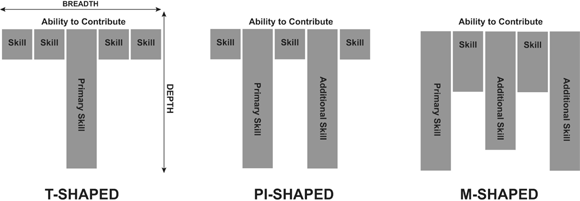
Whatever your business or organization, one fact remains: People will sometimes be unavailable. Building cross-functionality means your team can adapt to changes and prevent bottlenecks—if one person is out, another can step in to keep the work moving.
- It allows product owners to prioritize according to business value, not just technical skills.
- It encourages diverse input on optimal solutions.
- It enables pair development for higher quality.
- It helps team members grow by learning associative skills.
Want to go deeper? The science behind motivation in Scrum teams
Daniel Pink’s research highlights the importance of autonomy, mastery, and purpose for motivation. Scrum is designed to provide all three: autonomy through self-management, mastery through ongoing skill development and cross-functionality, and purpose via clear product goals and regular communication with stakeholders. This structure fosters engagement and sustained high performance.
Assess your team’s cross-functionality and identify opportunities for growth.
- List each team member and their primary skills.
- Identify which skills are covered by more than one person—and which are single points of failure.
- Discuss as a team: What skills could each person learn next to reduce bottlenecks?
How does your current team handle unexpected absences or shifting priorities?
In what ways might focusing on cross-functionality improve your personal growth as a developer?
Reflect on a time when your team succeeded or struggled due to gaps in cross-functional skills. What did you learn from that experience, and how could you apply that lesson to your work in a Scrum environment?
A Scrum team trait where members collectively decide how to accomplish their work and who does which tasks—without a manager assigning roles or tasks.
The ability of a team to cover all skills needed for product delivery, with each member capable of contributing in multiple areas, reducing bottlenecks and single points of failure.
Only project managers can coordinate and drive team performance; developers need direct management to stay on track.
Scrum teams are designed to be self-managing—developers collaborate directly and share responsibility for performance, quality, and delivery.
What is a self-managing Scrum team?
Tap to revealA team that takes full responsibility for delivering a product through peer collaboration, rather than relying on a manager for guidance.
What does cross-functional mean in a Scrum context?
Tap to revealIt means the team has all the skills necessary to deliver the product and each member can contribute in multiple roles or skill areas.
What is team thrashing?
Tap to revealThrashing is when developers are forced to switch between competing goals, which reduces focus and team productivity.
What steps could you or your team take to eliminate single points of failure and improve resilience?
Retaining that talent is one of the byproducts of good scrum.
- Scrum developers own the how and how much of product work.
- Self-management and cross-functional growth are essential for resilient teams.
Scrum developers thrive in self-managing, cross-functional teams where autonomy, mastery, and purpose drive collaboration and quality.
Building cross-functional skills is a process that transforms teams from collections of specialists into resilient, adaptable units capable of handling change and delivering value.
What is the optimal number of developers on a Scrum team for most situations?
How might you contribute to creating a more cross-functional and self-managing team in your organization?