The word “retrospective” comes from the Latin “retrospicere,” meaning “to look back.” In Scrum, it’s not just about looking back — it’s about using the past to fuel future progress.
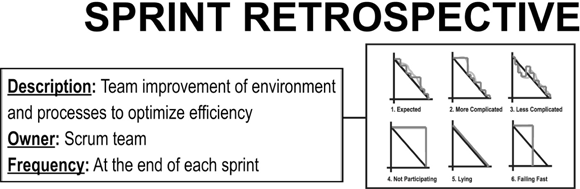
The sprint retrospective is the last scrum event in the sprint on the roadmap to value. This scrum event takes place after every sprint.
A recurring, timeboxed event at the end of each sprint where the scrum team inspects its process and plans ways to improve effectiveness and teamwork.
The sprint retrospective aims to review and improve the team’s practices, environment, quality, and effectiveness. It’s an opportunity for the scrum team — scrum master, product owner, and developers — to assess what went well in the unfinished sprint, the problems it encountered, and what can be improved. The process is inspection and adaptation — one more time — focusing on the people, interactions, processes, tools, and the definition of done used by the scrum team.
The outcome of the retrospective should be plans of action to continuously improve scrum, people, interactions, processes, and tools in every sprint. Although the scrum framework is simple — three accountabilities, three artifacts, and five events — and doesn’t require tweaking, each scrum team has quirks and nuances because of their product, organization, and development methods. Through the process of inspection and adaptation, you can aim those individualities toward the product goal.
Because the sprint retrospective asks for input and feedback from all scrum team members, it increases ownership through engagement and a sense of purpose. Team spirit is enhanced, which, in turn, leads to an increase in productivity and velocity — self-management.

It’s critical in sprint retrospectives to create a trusting environment. Each person’s view is listened to and respected, and nothing is taken personally. Trust is the key to keeping the retrospective from being a labyrinth of euphemisms or politics. The scrum master plays a pivotal role in creating an environment of trust.

The sprint retrospective may unveil problems within the team. An adept scrum master can facilitate the event to deal with these issues in an equitable, low-intensity environment. A sprint retrospective isn’t for venting; it’s for actionable improvement plans. Be on the lookout for passive-aggressive speech and personal agendas.
What are the risks if a team treats the retrospective as just a “box-ticking” exercise?
The sprint retrospective in a nutshell
The sprint retrospective takes place at the end of every sprint, after the sprint review, and before the next sprint’s planning session. Retrospectives are timeboxed to a maximum of three hours for a one-month sprint (shorter for shorter sprints). The entire scrum team participates.
In preparation for the retrospective, everyone should consider how the sprint went and jot down any ideas or concerns. As always, use simple tools such as sticky notes; avoid formal presentations.
Many agile teams use digital whiteboards or collaborative docs for retrospectives, especially when working remotely. The format may evolve, but the core principles remain: inclusion, candor, and action.
Although the scrum master may facilitate the meeting, everyone participates at a peer-to-peer level. The purpose of the sprint retrospective is to inspect the sprint that just ended to:
- Identify what went well in the sprint with the processes, tools, and team dynamics.
- Discuss and discover opportunities for improvement.
- Define an action plan for implementing the improvement(s).
A facilitation method for retrospectives: start with positives, address challenges, and finish with more positives to keep discussions balanced and constructive.
Remember to emphasize and give equal air time to what went well during the retrospective. It’s important to focus on the positive and identify what’s working well so you can keep doing it. Rejoice as a team in successes. Especially during initial scrum implementation, it’s important to recognize the wins — big and small.

The sandwich technique is an effective way to keep things positive and avoid isolating people during a retrospective. Start with positive, work through negative, and end with more positive.
Why is it important to give equal attention to what went well, not just what needs improvement, in a retrospective?
A retrospective discussion is action-oriented and doesn’t focus on justifications. When you hear the word because, that’s a good indication the discussion has turned to a justification of why someone did something a certain way. Keep moving forward by saying something like, “This is what I experienced, and this is what might work better going forward.” Don’t say, “I did it this way because …”
The sprint retrospective is an opportunity for the entire scrum team to improve continuously. So, it may not be best for the scrum master to always be the one doing the facilitating. Bringing in an experienced neutral third-party facilitator can benefit the entire scrum team (including the scrum master) to figure out ways to improve together as peers and equals.
- The sprint retrospective is a timeboxed event for inspection and adaptation at the end of every sprint.
- Trust, psychological safety, and focus on action are crucial for effective retrospectives.
Retrospectives are just a chance for team members to complain or vent about what went wrong.
Sprint retrospectives are action-oriented sessions designed to identify improvements and celebrate what worked, not to dwell on grievances.
How can a scrum master encourage honest feedback without making the discussion feel personal?
Engaging sprint retrospectives
Esther Derby and Diana Larsen wrote an excellent book called Agile Retrospectives: Making Good Teams Great (published by Pragmatic Bookshelf). Check it out for more tips and techniques on sprint retrospectives and other agile practices.
In Agile Retrospectives, Derby and Larsen point out that there is more to finding out what went well and what improvements need to be made than simply asking the same three questions at the end of every sprint. Retrospective facilitation takes preparation and strategy to get maximum participation, candor, and useful data from team members. The Derby and Larsen model for structuring a retrospective consists of a playbook of engaging techniques to help answer these questions:
- What do you think went well?
- What would you like to change?
- How should we implement that change?
To maximize retrospective effectiveness, we recommend the variety of techniques described by Derby and Larsen for each of the following aspects of a sprint retrospective:
-
Set the stage.
You want to establish ground rules for productive communication and clarify expectations and purpose from the beginning. Prepare the team for open and honest discussion.
-
Gather data.
Making decisions based on superficial, bad, or incomplete data can do more harm than good. You want to uncover important topics, jog memories, and correlate experiences that need to be addressed. You want to know what people think and how they feel about it.
-
Generate insights.
Many teams gather data but do nothing with it. Just as the best designs come from self-organizing teams, the best insights come from teams that transform data into plans for forward movement.
-
Decide what to do.
The team identifies the most valuable improvement(s) and agrees on specific action items for the next sprint.
-
Close the retrospective.
Summarize the action items, confirm everyone’s understanding, and end on a positive or forward-looking note.
Want to go deeper? The science behind effective retrospectives
Psychological safety is the number one predictor of high-performing teams, according to research by Google’s Project Aristotle. Retrospectives provide a structured space for building this safety, empowering teams to surface issues and experiment with solutions in a low-risk environment. When teams see real changes emerge from their feedback, motivation and trust soar.
Imagine you’re a scrum master preparing for your team’s next sprint retrospective. Try these steps:
- Draft two ground rules that will encourage open and respectful discussion.
- List one question you’ll ask to uncover what went well, and one question to discover improvement opportunities.
- Outline one method you’ll use (e.g., sticky notes, virtual board) to ensure everyone participates equally.
Think about a team or group you’ve worked with. If you could lead a retrospective for them, what’s one thing you’d celebrate, and one actionable improvement you’d propose? Reflect on how you’d foster trust and engagement during the session.
After making the sprint retrospective a core ritual, a fintech startup saw team velocity rise by 20% in just three months — all through small, continuous improvements agreed upon every two weeks.
Trust is the key to keeping the retrospective from being a labyrinth of euphemisms or politics.
The sprint retrospective is a vital opportunity for scrum teams to inspect how they work, foster trust, and agree on actionable improvements that drive both team effectiveness and product value.
Effective retrospectives require honest participation, constructive facilitation, and a shared commitment to continuous improvement — not just a review of what went wrong.
What is the primary purpose of the sprint retrospective?
What are the three main objectives of a sprint retrospective?
Tap to revealIdentify what went well, discuss opportunities for improvement, and define an action plan for implementing improvements.
Why is trust important in a sprint retrospective?
Tap to revealTrust encourages honest feedback and open communication, preventing the retrospective from becoming political or ineffective.
What is the “sandwich technique” in retrospectives?
Tap to revealA method where you start with positives, address negatives, and end with positives to keep feedback balanced and constructive.
The Shift
- Sprint retrospectives are essential for continuous improvement, not just routine meetings.
- Building trust and focusing on actionable outcomes makes retrospectives truly effective.
- Participation, honest reflection, and positive facilitation drive real team progress sprint after sprint.