How can a team turn feedback into continuous improvement during the sprint review?
At the end of every sprint, teams gather for a pivotal event: the sprint review. This is more than a checklist—it’s a dynamic forum for inspecting outcomes, gathering feedback, and adapting plans to maximize product value.
The sprint review is not just about demonstrating completed work—it’s a key opportunity for direct communication between developers and stakeholders, shaping the direction of the product.
The sprint review is the next stop on our roadmap to value. This scrum event is integral to the inspect-and-adapt nature of scrum and takes place at the end of each sprint.
The purpose of the sprint review is to inspect the outcome of the sprint and determine future adaptations. The product owner needs organizational feedback on whether the product is moving in the right direction. This review is also a great opportunity for the developers to stand up and show off their accomplishments.
This meeting at the end of every sprint is a working session, ensuring the stakeholders are up to date on what was accomplished in the sprint. This meeting is a forum for delivering feedback directly to the scrum team. Also, stakeholders have a working, releasable product increment in their hands. Progress toward the release and product goals are discussed, including the remaining budget.
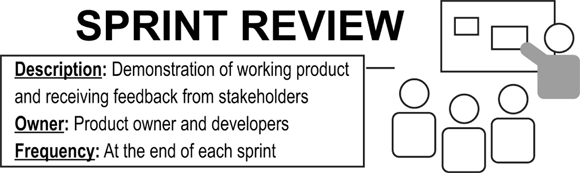
A timeboxed scrum event at the end of each sprint where the team inspects the product increment, receives stakeholder feedback, and adapts future plans.
The sprint review process
The sprint review, which is timeboxed to a maximum of four hours for a one-month sprint (shorter for shorter sprints), takes place at the end of the last day of the sprint. Therefore, allow for this time expenditure during the sprint-planning session.
The participants in the sprint review are the entire scrum team and the stakeholders in these roles:
- Scrum master: Facilitates the meeting, ensuring it stays focused and on time.
-
Product owner: Briefly reviews the sprint goal and how well the scrum team met the goal, fills in the stakeholders on what items from the backlog have been completed, and summarizes what’s left to go in the release, including the remaining budget or financial information. The product owner will also lead a collaborative discussion with all participants to determine what might be the next thing to work on.
 REMEMBER
The sprint review isn’t the time for the product owner to provide feedback to developers on the completed functionality; the product owner does that every day throughout the sprint. This event is for the scrum team to receive feedback from stakeholders on the direction in which they’re taking the product.
- Developers: Demonstrate and explain the completed requirements.
- Stakeholders: Ask questions and provide feedback.
The process begins with the developers preparing for the review. Consider the following guidelines for sprint-review preparation:
- The developers spend minimal time (probably no more than 20 minutes) preparing beforehand to showcase completed requirements.
- No formal slides should be used in a sprint review. Rather, the developers should spend their time developing the product instead of preparing a presentation.
- Only the requirements that have been deemed done (according to the definition of done) and approved by the product owner are demonstrated.
- The developers showcase the shippable functionality of the requirement — that is, how it works in the real world.

If you spend your time showing stakeholders what could or should have been done, you’re giving a rigged demonstration and haven’t done anyone any favors. Stakeholders never expect less; they always expect more. By making it look like your product increment works when it really doesn’t, you increase your workload for the coming sprint because you’ll have to make the work you showed (and the new work you plan for) actually work. Demonstrate only working, releasable product increments.
How does the sprint review process encourage transparency and accountability within the scrum team?
Stakeholder feedback
Critical to the success of the sprint review is stakeholder feedback. A constant communication cycle keeps the product development on track and produces what stakeholders want. Although stakeholders can’t tell developers how to develop requirements, they can give feedback to the product owner about the requirements and features they want to be developed and how well the implementations serve customers’ needs.
This feedback loop also serves another purpose: It keeps the developers involved and emotionally engaged in the work.
Feedback is a common theme throughout scrum. Multiple layers of feedback are involved in the scrum framework. Each time feedback is received, it gets cycled back into the product backlog and sprint-planning sessions — truly inspection and adaptation.
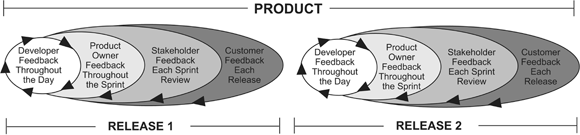
In many agile organizations, sprint reviews have evolved from formal presentations into collaborative workshops. Stakeholders are encouraged to interact directly with the product increment, offering real-time suggestions that shape future development priorities.
Why is stakeholder feedback during the sprint review critical for ensuring the product meets user needs?
Product increments
The product increment is the third of the three scrum artifacts.
The sum of all completed work in a sprint, forming a working product that is potentially releasable and meets the definition of done.
Within a single sprint, the product increment is a working product deemed done by the product owner and now potentially releasable. It’s potentially releasable because the product owner may not decide the product is ready to release until later. But it’s ready to release as soon as the product owner is ready.
A product increment has been:
- Elaborated
- Designed
- Developed
- Tested
- Integrated
- Documented
- Approved
During the sprint-review meeting, this product increment is demonstrated to stakeholders. The inspect-and-adapt sprint life cycle continues as feedback is taken and translated into requirements. Then these requirements may be enhanced during product-backlog refinement; they may rise in priority for consideration in future sprints and eventually become new product increments.
The sprint review is about improving the product. The sprint retrospective is how scrum teams can make this continuous improvement happen for their team and process.
Want to go deeper? The science behind scrum feedback loops
Research in agile methodologies reveals that frequent, targeted feedback accelerates learning and reduces costly misunderstandings. By embedding stakeholder feedback directly into the sprint review, scrum teams create a rapid iteration cycle that keeps products aligned with user needs and business goals.
Reflect on a time when you participated in a review meeting. How did receiving feedback affect your motivation and the final outcome? If you haven’t experienced this, imagine how the sprint review could foster improvements in a team setting.
Prepare a checklist for your next sprint review to ensure you showcase only completed, shippable work and encourage effective stakeholder feedback.
- List the requirements that are “done” and approved by the product owner.
- Draft 2–3 questions to invite stakeholder feedback on the demonstrated increment.
- Identify improvements that could be added to the product backlog based on feedback.
- The sprint review is a collaborative, feedback-driven event that shapes future product development.
- Only work that meets the definition of done and is approved by the product owner gets demonstrated.
What could happen if a scrum team demonstrates unfinished or non-working product increments during the sprint review?
Stakeholders use the sprint review to dictate changes directly to developers.
Stakeholders provide feedback to the product owner, who then prioritizes requirements and features for future sprints; developers remain focused on delivering agreed-upon work.
Practitioners often remark that the most valuable sprint reviews are highly interactive, allowing stakeholders to ask questions, provide feedback, and even test the product increment themselves. This direct involvement can lead to creative solutions and greater alignment.
Definition of Sprint Review
Tap to revealA feedback-driven scrum event at the end of each sprint to inspect outcomes and adapt plans.
Role of Product Owner in Sprint Review
Tap to revealReviews sprint goals, communicates completed items and budget, and leads feedback discussion.
Definition of Product Increment
Tap to revealThe sum of completed work in a sprint, forming a potentially releasable, working product.
Stakeholder’s Role in Sprint Review
Tap to revealAsk questions and provide feedback to influence future product priorities.
Which requirement should be demonstrated during a sprint review?
The sprint review is a critical feedback-driven event that allows teams to inspect completed work, gather stakeholder input, and adapt plans to ensure the product delivers maximum value.
Only completed and approved requirements should be demonstrated during the sprint review, ensuring transparency and trust in the product development process.
Stakeholders never expect less; they always expect more.
Feedback loops in scrum are essential for continuous improvement, bridging the gap between development and stakeholder needs.
The Shift
- Sprint reviews harness feedback to drive product adaptation and value.
- Only “done” requirements are demonstrated, reinforcing transparency and trust.
- Stakeholder input shapes future priorities, creating a cycle of continuous improvement.